What you see is what you get, and what you get is more than you could bargain for. Real - to the bone
Friday, December 30, 2011
Bolt, still breaking records
With 210 days (as of December 30) to go before the London Summer Olympic Games, Usain Bolt is about to set another record. His Social Media numbers have been improving rapidly and even in off season, he seems to be attracting new fans. Bolt's Facebook numbers are moving closer to 6 million and he stands to achieve that before the Games...while on Twitter his number has doubled in less than six months.
Facebook Fans total 5.72 million, while Twitter has shown great growth since May moving from 125,000 then to 328,000. The interaction for Bolt, who talks 'often' to his fans has opened up a new set of opportunities for him. Since November he has added over 87,000 fans on Facebook and just under 20,000 Twitter followers.
Bolt ended the 2011 season unbeaten and has copped several nominations including Laureus Awards (won in 2008 and 2009); Latin American and Caribbean AOY; IAAF top 100 sprinter, IAAF Male athlete of the year. He missed out on the JAAA top prize, but was a contender.
Although Bolt is reaping rewards from the track...off the track he has been making a significant contribution to charity, by pledging his support to the 14th Sigma Corporate Run (February 19, 2012); and continues to support projects through his Usain Bolt Foundation.
Coming up early in 2012...a few major projects will be announced including business partnerships and more charity activities. Bolt and his Racers Track Club team mates are in full preparation mode for the active 2012 track and field season.
He has been also nominated for the RJR Sports Foundation Awards, scheduled for Friday, January 20 in Kingston.
Saturday, December 17, 2011
Sport Outlook for Jamaica for 2012
As the London Summer Olympics draw closer (223 days to go) there are so many opportunities for Jamaican sportsmen and women to shine in their respective disciplines. The country has exhibited it has potential in a few areas, like
■Badminton
■Bodybuilding
■Boxing
■Chess
■Cycling
■Golf
■Gymnastics
■Hockey
■Lawn Tennis
■Martial Arts
■Motor Racing
■Polo
■Squash
■Surfing
Some of those listed above are not Olympic Sporting disciplines, but will have major events to expose the wide range of talent available. Some of the most successful at the international level are Track and Field, Cricket, Football, Basketball, Netball, Table Tennis, Volleyball - based on team standings, scholarships, players' participation in international leagues and media impact.
As 2012 draws closer, the athletes are all preparing to put on a great show and all the support available should be given to create an environment which makes it easier for them to produce great results as we all expect.
Business and Investment Opportunities
The investment opportunity for sport will also be on the country's radar as there are facilities across Jamaica which can help to boost the industry and in fact concretise Jamaica's position, as not only the place which produces world-class athletes, but as a venue for The Business of Sport.
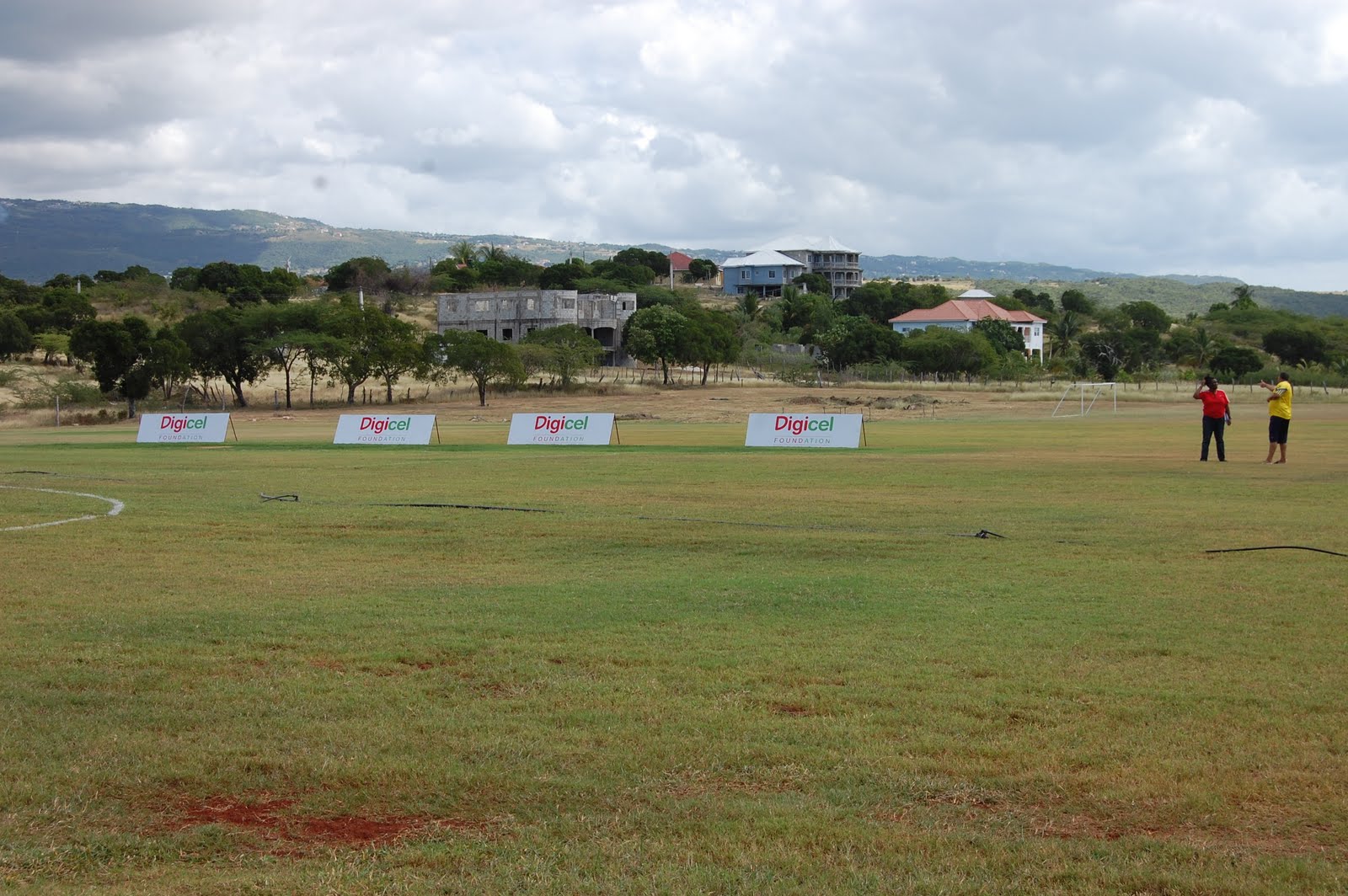
The potential of the Treasure Beach Sports Park which sits on a 15-acre property which can house four football (soccer) fields, three cricket fields with nets, tennis, basketball, netball courts along with a recreational area for play is just one of the many projects available.
The two-day conference on The Business of Sport (May 3 - 6) will be held under the theme 'Stay in the Game' and will highlight the six major areas of how to stay in the game - Legal (contracts), Marketing, Media, Psychology (Maintaining the Competitive Edge), Nutrition and Events will continue to focus Jamaica's priorities. These projects require private and public sector partnerships and should be attractive for potential partners.
Let's support the Sports Industry, one of the Jamaica's best prospects for growth and development - one which require people and can generate well needed funds for the economy.
Friday, December 9, 2011
Usain Bolt - Unbeaten in 2011
Announcers now call him, “the great man", and rightly so, as no known human being has ever run faster. But this season, Usain Bolt may have earned that titled even more so than in past world record-setting years. This season, Bolt’s greatest challenger was not Tyson Gay, or countryman Asafa Powell, but his own limitations as a man. Bolt’s greatness in 2011 was not embodied in an unimaginable time or a thrilling victory, but through overcoming injury and human error to still retain his title as the world’s fastest man.
No less decorated than in years past – posting the fastest 100m time of 2011 (9.76) winning the world championship in the 200m, and bringing yet another gold medal and world record home to Jamaica in the 4x100m relay – Usain Bolt has once again produced a thrilling campaign of races. However, what may be all the more impressive, despite not being in his best form, Bolt completed the 2011 campaign with a nearly perfect record of nine first place finishes – the only blemish being the false-start in Daegu.
6-May-11 Rome 100m First Place 9.91
31-May-11 Ostrava 100m First Place 9.91
9-Jun-11 Oslo 200m First Place 19.86
8-Jul-11 Paris 200m First Place 20.03
22-Jul-11 Monaco 100m First Place 9.88
29-Jul-11 Stockholm 200m First Place 20.03
28-Aug-11 Daegu 100m False-start
3-Sep-11 Daegu 200m First Place 19.4
4-Sep-11 Daegu 4x100m First Place 37.04 World Record
13-Sep-11 Zagreb 100m First Place 9.85
16-Sep-11 Brussels 100m First Place 9.76 Fastest Time of 2011
No less decorated than in years past – posting the fastest 100m time of 2011 (9.76) winning the world championship in the 200m, and bringing yet another gold medal and world record home to Jamaica in the 4x100m relay – Usain Bolt has once again produced a thrilling campaign of races. However, what may be all the more impressive, despite not being in his best form, Bolt completed the 2011 campaign with a nearly perfect record of nine first place finishes – the only blemish being the false-start in Daegu.
6-May-11 Rome 100m First Place 9.91
31-May-11 Ostrava 100m First Place 9.91
9-Jun-11 Oslo 200m First Place 19.86
8-Jul-11 Paris 200m First Place 20.03
22-Jul-11 Monaco 100m First Place 9.88
29-Jul-11 Stockholm 200m First Place 20.03
28-Aug-11 Daegu 100m False-start
3-Sep-11 Daegu 200m First Place 19.4
4-Sep-11 Daegu 4x100m First Place 37.04 World Record
13-Sep-11 Zagreb 100m First Place 9.85
16-Sep-11 Brussels 100m First Place 9.76 Fastest Time of 2011
Thursday, October 13, 2011
SOCIAL MEDIA AND ATHLETES
October 13, 2011
As the business of sport grows and generates billions of dollars across the world, more and more athletes are finding creative ways to market and brand themselves. Social Media has played a major role. The use of traditional media plus Facebook, Twitter, Youtube and SKYPE are the major internet tools being used to reach out to a wider range of fans and consumers. How then can Jamaican athletes benefit from this massively growing platform?
So whether it’s a tweet from New England Patriot’s wide receiver, Chad Ochocinco on what he is having for lunch; Tennis superstar, Serena Williams’ movie night at her home or Usain Bolt’s countdown to training for the 2012 season…they talk to us more than ever before through the use of Social Media. Ochocinco and Williams each have over two million followers on Twitter; while Bolt has just over a quarter million.
How can Social Media help? It gets you up close and personal with the public and it makes them feel like they know you even more and that is great. It also gives sponsors an additional outlet for athletes to promote its relationship with shoes, shirts, watches, footballs, boots or even a line of food items.
Of course there are down sides to this tool as it is immediate, it spirals quickly and it reaches more people in a short space of time, beyond imagination.
According to Bleacher Report “sometimes athletes don't know how to keep their mouths shut. They believe that they are invincible and untouchable despite what they stir up. Social networking has allowed athletes the opportunity to be more vocal and communicative with fans and fellow athletes, not necessarily for the better.”
Here are some examples of bad tweets - While he was playing for the U.S. national team, Brian Chu
ng felt that his club team, the Houston Dynamo, was cheated by the refs and didn't hesitate to tweet his reaction – “Ref in Seattle just cheated the dynamo. What a joke. Not even close. Ref is a cheat.”
While Marcus Jordan is undoubtedly correct in his comments towards those who continuously compare Kobe Bryant to the elder Jordan, this tweet was unnecessary - “NO ONE…and I mean no one should ever com par kobe Bryant to my dad…”
To find out the dos and don’ts of Social Media from the Managers, Sponsors and Public’s perspective, attend the Social Media and Athletes Workshop on Tuesday, November 8 from 8:00 – 11:00 am at the Jamaica Pegasus. Participants may register online at www.thebusinessofsport.org Entry is J$1,500
There is a special rate for groups of ten or more. The event is put on by Carole Beckford and Associates and Strategic Corporate Interventions and brought to you by the Gleaner.
As the business of sport grows and generates billions of dollars across the world, more and more athletes are finding creative ways to market and brand themselves. Social Media has played a major role. The use of traditional media plus Facebook, Twitter, Youtube and SKYPE are the major internet tools being used to reach out to a wider range of fans and consumers. How then can Jamaican athletes benefit from this massively growing platform?
So whether it’s a tweet from New England Patriot’s wide receiver, Chad Ochocinco on what he is having for lunch; Tennis superstar, Serena Williams’ movie night at her home or Usain Bolt’s countdown to training for the 2012 season…they talk to us more than ever before through the use of Social Media. Ochocinco and Williams each have over two million followers on Twitter; while Bolt has just over a quarter million.
How can Social Media help? It gets you up close and personal with the public and it makes them feel like they know you even more and that is great. It also gives sponsors an additional outlet for athletes to promote its relationship with shoes, shirts, watches, footballs, boots or even a line of food items.
Of course there are down sides to this tool as it is immediate, it spirals quickly and it reaches more people in a short space of time, beyond imagination.
According to Bleacher Report “sometimes athletes don't know how to keep their mouths shut. They believe that they are invincible and untouchable despite what they stir up. Social networking has allowed athletes the opportunity to be more vocal and communicative with fans and fellow athletes, not necessarily for the better.”
Here are some examples of bad tweets - While he was playing for the U.S. national team, Brian Chu
ng felt that his club team, the Houston Dynamo, was cheated by the refs and didn't hesitate to tweet his reaction – “Ref in Seattle just cheated the dynamo. What a joke. Not even close. Ref is a cheat.”
While Marcus Jordan is undoubtedly correct in his comments towards those who continuously compare Kobe Bryant to the elder Jordan, this tweet was unnecessary - “NO ONE…and I mean no one should ever com par kobe Bryant to my dad…”
To find out the dos and don’ts of Social Media from the Managers, Sponsors and Public’s perspective, attend the Social Media and Athletes Workshop on Tuesday, November 8 from 8:00 – 11:00 am at the Jamaica Pegasus. Participants may register online at www.thebusinessofsport.org Entry is J$1,500
There is a special rate for groups of ten or more. The event is put on by Carole Beckford and Associates and Strategic Corporate Interventions and brought to you by the Gleaner.
Wednesday, September 28, 2011
Job Description for Jamaica's next PM
Now is a good time, if ever, to put together a job description for Jamaica's Prime Minister. Over the last 49 years we have been really testing the leadership/management of this country and while some things have worked, there are a lot more things that could change.
The next PM should be a good manager
The next PM should be a good negotiator
The next PM should understand protocol
The next PM should be able to make decisions in a timely manner
The next PM should be able to select the best team to carry out the work required to grow Jamaica
The next PM should at least know what industries are trending and select the champions to move them ahead
The next should have read the following books over the last five years - The Politics of Change - Michael Manley; Animal Farm - George Orwell; Things Fall Apart - Chinua Achebe; Humility - Andrew Miller; Leading without Power (will find the author)
The next PM should have had another job outside of politics
The next PM should have some volunteer experience
I know there are more things to add, but this could be a good start....
P.S. I know commitment to people is important, but since that cannot be measured whether by an interview or by a psychometric, I will stick to these for now.
The next PM should be a good manager
The next PM should be a good negotiator
The next PM should understand protocol
The next PM should be able to make decisions in a timely manner
The next PM should be able to select the best team to carry out the work required to grow Jamaica
The next PM should at least know what industries are trending and select the champions to move them ahead
The next should have read the following books over the last five years - The Politics of Change - Michael Manley; Animal Farm - George Orwell; Things Fall Apart - Chinua Achebe; Humility - Andrew Miller; Leading without Power (will find the author)
The next PM should have had another job outside of politics
The next PM should have some volunteer experience
I know there are more things to add, but this could be a good start....
P.S. I know commitment to people is important, but since that cannot be measured whether by an interview or by a psychometric, I will stick to these for now.
Tuesday, September 27, 2011
JAMAICA needs stronger club structure in track and field
KINGSTON, September 2010 Just over 62 years ago, Jamaica participated in its first Summer Olympic Games in London. This was after a 12-year break from the Games because of World War II. The last being in Berlin, where American Jesse Owen took the world by storm. Jamaica (with the Union Jack flag as its symbol) copped three medals - one gold and two silver. Arthur Wint won gold in the 400 metres and silver in the 800 metres; while Herb McKenley took silver in the 400 metres. Since then the country has participated in every Summer Games.
Fast forward to 2008 edition in Beijing where the country earned its most medals in the Games history - six gold, three silver and two bronze for a total of 11. What has been the constant throughout these years? The love for track and field, and so the Jamaica Olympic Association (JOA), Jamaica Amateur Athletic Association (JAAA) and its affiliates have made every effort to manage the sport.
As is customary in any business, the success has opened the doors of opportunity and the country has a glorious chance to create a dynamic club structure which fosters the growth and development of track and field. The two known and outstanding clubs are
- MVP led by Bruce James
- Racers led by Glen Mills
I know there are others around, but they need to be formalised and organised to absorb the ground swell of people/potential athletes who now seek to be trained and developed in Jamaica.
What has happened the burden is now on those two clubs and with hunt for medals on for 2011 (Daegu) and 2012 (London) - athletes have begun and will continue to search for a comfortable track and field home.
I am calling on the rest of the clubs to become formal and attract athletes and create a structure around them that will help them development. The templates are available and no need to re-invent the wheel. October/November is the start of the club year so there is time to get cracking. It would be a great way to support the sport of track and field we all love
What say you?
Fast forward to 2008 edition in Beijing where the country earned its most medals in the Games history - six gold, three silver and two bronze for a total of 11. What has been the constant throughout these years? The love for track and field, and so the Jamaica Olympic Association (JOA), Jamaica Amateur Athletic Association (JAAA) and its affiliates have made every effort to manage the sport.
As is customary in any business, the success has opened the doors of opportunity and the country has a glorious chance to create a dynamic club structure which fosters the growth and development of track and field. The two known and outstanding clubs are
- MVP led by Bruce James
- Racers led by Glen Mills
I know there are others around, but they need to be formalised and organised to absorb the ground swell of people/potential athletes who now seek to be trained and developed in Jamaica.
What has happened the burden is now on those two clubs and with hunt for medals on for 2011 (Daegu) and 2012 (London) - athletes have begun and will continue to search for a comfortable track and field home.
I am calling on the rest of the clubs to become formal and attract athletes and create a structure around them that will help them development. The templates are available and no need to re-invent the wheel. October/November is the start of the club year so there is time to get cracking. It would be a great way to support the sport of track and field we all love
What say you?
Sunday, September 18, 2011
College System - Bridging the Gap
For the 2011 – 2012 period in the collegiate system in the Jamaica, close to 100 student athletes have been awarded scholarships from colleges. Mico University, University of Technology, University of the West Indies and the GC Foster College of Physical Education & Sport have so far registered their intention to prepare and improve on the development of athletes from various sporting disciplines. It suggests that for the next four years, we should see our student athletes continue with their excellent performances on the field of play, but also have greater access to acquire requisite training and development in other professional areas.
These scholarships are a welcome addition to the growth and development of the sport industry as Jamaica progresses and grow into the sporting mecca of the world. This effort has to be lauded. While the colleges/universities have their own agenda in terms of collegiate competitions, it may also be a great idea to have the athletes at least meet once/twice each year to exchange notes and ideas on their varied experiences in a controlled setting. The offices of Students Affairs may want to coordinate on their calendars.
We know the value of a great education especially to athletes who seek the best opportunity for earning ability and it is the responsibility of the athlete to seek this out, but the system can and is playing its role. The efforts by the college system are also important as it is this age group, 17 – 26, that poses some challenges, according to researchers. So I am hoping we can officially track some of these individuals to look at their overall progress in highlighting the validity of the programmes and what shortfalls there may be, with recommended improvements.
Support Programmes
While we are growing the industry though, it is also of value that we train to provide the support in administration, technical, social and other developmental areas. We have seen how quickly the sport sector is growing and is bursting at the seams in some areas; but we have to be mindful that the athlete base does not outgrow the support we can offer.
It is therefore important to have better access to courses in sport management, sport psychology, sport administration, sport nutrition, statistics, budgeting and finance as areas that will complement the training being done on the academic side for the athletes. The Business of Sport while having the athletes can only be stronger if the support grows. The formal four-year programmes do offer some of the related courses, but there are creative ways to offer professional modules which last for up to 45 hours, making it also in keeping with international standards. What this does too is attract some people from ‘outside’ the industry to make better use of some skills and knowledge.
An athlete ultimately wants to perform at the highest level of competition, either in the world championship of their respective sport or the Olympic Games, and while London is just around the corner, the Brazil 2016 programme should start now. I am excited at these developments and we look forward to the support from all. Well done!
September 14, 2011
These scholarships are a welcome addition to the growth and development of the sport industry as Jamaica progresses and grow into the sporting mecca of the world. This effort has to be lauded. While the colleges/universities have their own agenda in terms of collegiate competitions, it may also be a great idea to have the athletes at least meet once/twice each year to exchange notes and ideas on their varied experiences in a controlled setting. The offices of Students Affairs may want to coordinate on their calendars.
We know the value of a great education especially to athletes who seek the best opportunity for earning ability and it is the responsibility of the athlete to seek this out, but the system can and is playing its role. The efforts by the college system are also important as it is this age group, 17 – 26, that poses some challenges, according to researchers. So I am hoping we can officially track some of these individuals to look at their overall progress in highlighting the validity of the programmes and what shortfalls there may be, with recommended improvements.
Support Programmes
While we are growing the industry though, it is also of value that we train to provide the support in administration, technical, social and other developmental areas. We have seen how quickly the sport sector is growing and is bursting at the seams in some areas; but we have to be mindful that the athlete base does not outgrow the support we can offer.
It is therefore important to have better access to courses in sport management, sport psychology, sport administration, sport nutrition, statistics, budgeting and finance as areas that will complement the training being done on the academic side for the athletes. The Business of Sport while having the athletes can only be stronger if the support grows. The formal four-year programmes do offer some of the related courses, but there are creative ways to offer professional modules which last for up to 45 hours, making it also in keeping with international standards. What this does too is attract some people from ‘outside’ the industry to make better use of some skills and knowledge.
An athlete ultimately wants to perform at the highest level of competition, either in the world championship of their respective sport or the Olympic Games, and while London is just around the corner, the Brazil 2016 programme should start now. I am excited at these developments and we look forward to the support from all. Well done!
September 14, 2011
Subscribe to:
Posts (Atom)